Last Updated on November 11, 2026
Nitecore makes pocket lights, long-range handhelds and little keychain lights that can go places where a larger flashlight would be awkward. Choosing the best Nitecore flashlight starts with the job. A focused beam helps you check the far end of a field. At a workbench or in a fuse box, a broad beam and a lower setting are often easier to use. A light you keep in a drawer also needs a battery you can replace or charge easily.
This guide compares 16 Nitecore models, from compact keychain lights to four-cell handhelds. The first three reviews cover the P12, P12GT and original P30 shown in the comparison table. You will also find the AA-compatible MT2A Pro, the adjustable-head MT21C and the USB-C rechargeable MH12 Pro. Older models remain useful comparisons for readers choosing accessories or deciding whether to replace a light they already own. Our flashlight buying guide explains how beam shape, controls and size affect everyday use.
Best Nitecore Flashlight Comparison Table
The P12, P12GT and P30 all have a 1,000-lumen rating. Their optics put that light to different uses. The original P12 gives you a compact body and a general-purpose beam. The P12GT adds reach in a similar shape. The original P30 has a larger head and concentrates much more of its output into the center of the beam.
| Image | Flashlight name | Output and modes | Technical features |
|---|---|---|---|
Original P12 kit Check Price |
Nitecore P12 original Read Review |
1,000 lumens and 232 m. Four steady levels plus Strobe, SOS and Beacon. | One compatible 18650 or two compatible CR123A batteries. Tail power switch and side mode button. |
Compact thrower Check Price |
Nitecore P12GT Read Review |
1,000 lumens and 320 m. Four steady levels plus Strobe, SOS and Beacon. | One compatible 18650 or two compatible CR123A batteries. XP-L HI V3 emitter for a tighter spot. |
Long-range pick Check Price |
Nitecore P30 original Read Review |
1,000 lumens and 618 m. Five steady levels plus Strobe, SOS and Beacon. | One compatible 18650 or two compatible CR123A batteries. Larger reflector and optional color filters, depending on kit. |
These are three older models with separate switches for power and brightness. Check how often you need to change levels and whether you already own the right charger. The best Nitecore flashlight for a bag you carry every day may be the one you can use one-handed at a moderate setting. A dedicated thrower makes more sense if you need to see a smaller area farther away.
Best Nitecore Flashlight Reviews for 2026
The reviews follow the comparison table, then cover work lights, keychain lights and rechargeable handhelds. A familiar model name can cover several generations. The original P12, NEW P12 and P12GT have different specifications, as do the MH12 and MH12 Pro. Match the complete name before choosing a spare cell or comparing a runtime figure. The battery and charging table below brings those differences together.
Nitecore P12 1000 Lumen Flashlight Review
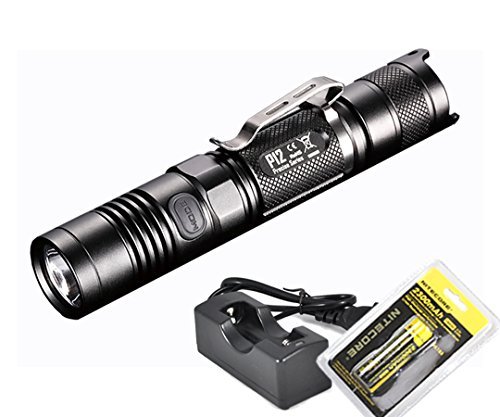
The original-generation P12 covered here is the 232-meter edition. It has a tail switch for power and a side switch for mode changes. Its 1,000-lumen High and 232-meter rated beam make it useful for household checks, short walks and outdoor work. The later NEW P12 is a different model with a 1,200-lumen peak and support for a larger 21700 cell. If you are comparing a used P12 with a newer light, check the exact name before comparing the numbers.
Technical Specifications
| Feature | Details |
|---|---|
| Maximum output | 1,000 lumens on High |
| Steady and special modes | 1,000, 240, 70 and 1 lumen, plus Strobe, SOS and Beacon |
| Maximum beam distance | 232 m |
| Power | One compatible 18650 or two compatible CR123A cells |
| Rated runtimes | High 1 h 15 min. Mid 6 h. Low 28 h. Lower up to 520 h. See the chart for your revision. |
| Charging | External charging arrangement for a supported rechargeable cell |
| Water and impact protection | IPX8 to 2 m and 1.5 m impact resistance on the 232 m P12 specification |
| Weight | Approximately 90 g without a battery |
| Switches | Tail power switch and side mode button |
| Body | Anodized aluminum |
 Check Price
The 520-hour figure in the original P12 chart belongs to its 1-lumen mode. That setting can help you find a key or a zipper in the dark. Use a middle level for a longer walk and reserve High for a shorter check across a yard. If you want a separate charging port on the flashlight body, the Fenix UC35 is a useful comparison, with a different control and charging arrangement. The Fenix PD35 review covers compact Fenix alternatives by generation.
Best use. This is a candidate for the best Nitecore flashlight if you want a slim body, a replaceable 18650 and direct access to the tail switch. The 18650 comes out for charging. Use a cell the light supports, and keep a charged spare in a protective case if the flashlight needs to stay ready while the other battery is charging.
- Pros. Straightforward power and mode controls, four steady levels and two approved power formats.
- Cons. Charging takes a separate charger or a supported battery with its own port. The beam is less concentrated than the P12GT’s.
Nitecore P12GT Flashlight
The P12GT uses a Cree XP-L HI V3 LED and a more concentrated beam than the original P12. Nitecore rates it at 1,000 lumens and 320 meters. Its tighter spot helps when you are looking down an open path or across a yard. At arm’s length, the P12’s broader pattern can be easier to work with. Our Nitecore P12GT flashlight review covers its switch layout. The P12GT and Fenix PD35 comparison shows how it differs from a similarly sized light with the same peak output.

The P12GT is most useful when you want a small handheld that concentrates its beam farther down a path. That concentrated center also makes small hand movements more noticeable during close work. The original P12 is a useful alternative for a broader beam and the same tail-switch style. Its kit is another option if you already use compatible 18650 batteries.
The P12GT uses one supported 18650 or two supported CR123A primary cells. Nitecore’s 18650 chart lists 1,000 lumens for 1 hour, 280 lumens for 5 hours 15 minutes, 55 lumens for 28 hours and 1 lumen for up to 520 hours under its test conditions. Those runtimes describe the rated modes. For a long shift, compare the output you can work with for most of the time, rather than planning around the maximum setting.
- Pros. More beam reach in a compact body, a useful 55-lumen setting and direct tail-switch operation.
- Cons. The smaller hot spot is less convenient for broad close-up work. The rechargeable cell comes out for charging.
Nitecore P30 1000 Lumen Flashlight
The original P30 is the long-range choice in the table. Its 1,000-lumen white beam is rated to reach 618 meters. A larger reflector puts more intensity into the center than the original P12 or P12GT. If you are choosing the best Nitecore flashlight for checking fence lines or looking into open ground, that tight spot matters more than a higher lumen figure from a wide beam. Our guide to flood and throw explains how those two beam types behave.
 Check Price
The original P30 runs on an approved 18650 or two approved CR123A cells. Its body has no charging port. The red and green accessories supplied with some hunting bundles are filters for the white beam. Check what comes in your particular kit, since a flashlight-only package and a kit with filters and a mount serve different buyers. If you only want a handheld for the yard or the trail, the light and a suitable battery may be all you need.
Check the version if you see a P30 with a 21700 battery. The NEW P30 keeps the 1,000-lumen and 618-meter headline ratings and supports a 21700. A supplied USB-C rechargeable cell has its port on the battery. The later P30i is rated for up to 2,000 lumens and 1,000 meters, uses the specified i-series power system for full output and has USB-C charging on the flashlight. Each version has its own cell and charging instructions.
- Pros. Focused beam for outdoor distance and separate power and mode switches.
- Cons. The wider head takes up more room in a pouch. The tight spot can be uncomfortable for work close to a pale surface.
Nitecore TM03 Flashlight Review
The TM03 was designed to deliver a brief high-output beam from a single specified battery. Its original cool-white model is rated at 2,800 lumens and 289 meters. It requires the dedicated NI18650D cell. The battery is shaped like an 18650, but the light uses a specific contact arrangement. Use the exact cell and approved charging equipment named in the manual. Keep that requirement in mind before buying a TM03 as a used light.

The TM03 has two controls at the tail. The main switch handles momentary and constant illumination, while the secondary control provides the selected direct-access function. Its two operating configurations favor either Turbo or Strobe access. Set that preference before carrying the light, so a quick press produces the response you expect. The dedicated NI18650D battery requirement is an important part of choosing this model.
For a short look outside, the TM03 gives you more light than a small pocket model. If you need the beam for a long task, its lower levels are easier to manage. The head heats up at higher output, and the turbo rating describes peak output rather than a steady level you should expect for the full rated runtime.
- Pros. Strong burst output from a compact body and more than one tail control.
- Cons. A dedicated battery is essential. The higher modes are better for short checks than continuous close-up use.
Nitecore MT21C Adjustable-Head Work Light
For repairs, the MT21C is one of the best Nitecore flashlight options because its head tilts through 90 degrees. You can use it straight like a conventional flashlight, angle the beam toward a work surface, or stand it on its magnetic base. A hanging loop and pocket clip give you other ways to position it when both hands are occupied.
Nitecore rates the MT21C at up to 1,000 lumens and 184 meters. It has five steady brightness levels, with a 1-lumen setting for very close work. The quoted 700-hour maximum belongs to the lowest output. Use a moderate level when the light is fixed close to a reflective panel, and angle the head until the hotspot falls where you need it.
It accepts one supported 18650 or the listed two-cell CR123/RCR123 options. The flashlight has no charging port, so rechargeable cells use compatible external charging equipment. A side button operates the light and its levels. The Nitecore MT21C review covers the adjustable head and controls in more detail.
- Pros. Adjustable beam direction, magnetic base, hanging loop and a useful low setting.
- Cons. Rechargeable cells need separate charging equipment. The magnet needs a suitable steel surface to support the light.
Nitecore TIP 2017 Upgrade Flashlight Review
The TIP 2017 is a small rechargeable light with two buttons and a clip that can cover the controls during carry. Its 360-lumen Turbo is useful for a brief look down a path. The lower levels are easier to use when you are finding a lock, looking through a bag or checking a label. It charges through Micro-USB and uses a built-in battery.
 Check Price
Updated Features of Nitecore TIP 2017 Upgrade
The 2017 version has two operating modes. Daily mode automatically switches the light off after about 30 seconds. Constant mode stays on until you turn it off or the battery runs down. Choose Daily if you mainly use it to get through a doorway or find something on your keyring. Use Constant when you need a steady light for several minutes. Check the product name and controls if you are comparing TIP, TIP 2017, TIP CRI and TIP SE. Those names describe different versions.
Why Choose the Nitecore TIP 2017?
If you are looking for the best Nitecore flashlight to keep with your keys, the TIP is a practical option when you want several output levels and a physical clip. The keychain flashlight guide includes other shapes and charging methods. Pick the one that sits comfortably next to your keys, and check whether you already keep the right charging cable near the door or in your bag.
- Pros. Short body, separate buttons and a useful choice between timed and continuous use.
- Cons. The built-in battery has to be recharged. For a longer trip, carry a second light or a way to recharge it.
Nitecore MT2A 345 Lumen Flashlight
The original MT2A runs on two AA batteries. It reaches 345 lumens and a rated 152 meters. The manufacturer lists four steady levels of 345, 138, 55 and 17 lumens. Up to 50 hours is the rating for the 17-lumen setting. The light is slim enough for a pouch or tool bag, and replacing a pair of AAs takes less time than recharging a battery pack.

With the head tightened, the original MT2A starts in Turbo. Loosen it slightly to reach the user-defined group, then use the rear switch to select a lower level or a signaling mode. Set a preferred low level before you need it. The original model suits a kit stocked with two ordinary AAs, while the MT2A Pro below adds a dedicated rechargeable power option and a different single-switch interface.
- Pros. Common replaceable batteries, four steady levels and a narrow two-cell grip.
- Cons. The head-and-tail sequence takes some practice. Charging options depend on the batteries you use outside the light.
Nitecore MT2A Pro Rechargeable AA Flashlight
The MT2A Pro is a separate model with one tail switch, a more concentrated beam and a removable NL1416R rechargeable cell. It is rated at up to 1,000 lumens and 255 meters with that cell. Two compatible AAs give up to 500 lumens. The maximum output changes with the power source, so use the AA rating if that is how you plan to run it.
The charging port is on the NL1416R battery. To use it, switch the light off and remove the cell, then connect a USB-C cable to the cell. Ordinary 14500 lithium-ion batteries are incompatible. If the best Nitecore flashlight for your kit needs both a rechargeable option and easy-to-carry spares, the MT2A Pro gives you both. The AA flashlight comparison compares other single-AA and dual-AA lights with different controls and beams.
- Pros. Rechargeable power for regular use and approved AA backup for times when you are away from a charger.
- Cons. The peak output requires the specified cell. There are fewer brightness levels when using AAs.
| Power source | Maximum output | Charging and use |
|---|---|---|
| One NL1416R rechargeable cell | 1,000 lumens and 255 m | Remove the cell and charge through its USB-C port. Three steady levels. |
| Two supported AA batteries | Up to 500 lumens | Replace the pair together. Use the AA operating levels specified in the manual. |
Nitecore Tiny Monster TM28 Flashlight
The TM28 is a larger, four-cell flashlight with a bright, concentrated beam. Nitecore rates it for up to 6,000 lumens and 655 meters when it is set up with the specified high-drain IMR cells. With suitable standard Li-ion 18650s in the correct battery setting, the top rating is 4,500 lumens. That distinction matters when you compare it with a light sold as a complete kit.
 Check Price
The OLED screen shows information such as the active level and estimated runtime. Set the battery mode to match the actual cells. Use a matched set of approved cells, replace or charge them together as directed, and follow the manual for the supplied charging equipment. The guide to flashlight battery types explains why a label such as 18650 describes the cell’s size without telling you everything about its electrical characteristics.
The best Nitecore flashlight for checking a large open area may be a heavier one if beam reach matters more than pocket carry. The TM28 is easier to justify when you need that reach regularly. For reading a trail map or working next to a wall, a lower setting or a smaller light is easier to handle. Start at a usable level and save Turbo for the moment you need to see farther.
- Pros. Long beam, several usable levels and an information display.
- Cons. Four cells and a larger body make it heavier to carry. Its maximum output depends on using the specified cells and setting.
Nitecore MH20GT Flashlight Review
The MH20GT is a compact rechargeable light with a focused spot. Nitecore lists a peak of 1,000 lumens and 362 meters. Its smaller body is useful if you want more reach than a typical close-range light while keeping the light short enough for a pouch. A side button handles power and output. Try its half-press and full-press actions if you normally use a simple tail switch.
 Check Price
The MH20GT charges a supported 18650 through a Micro-USB port on the flashlight. Check that the port cover closes before putting the light away for wet conditions. If you use the approved primary-cell option, treat those cells as replacements and follow the manual for charging the rechargeable battery. For cable and battery differences across models, see our guide to rechargeable flashlights.
This is a candidate for the best Nitecore flashlight if you want a short body and a more focused beam. For regular work under a cabinet, compare the low mode and the size of its center spot first. For a light that needs to stay in service through several jobs, check the state of the battery before you leave and bring a charged spare if the trip calls for one.
- Pros. Reach from a short body, a covered charging port and a direct side control.
- Cons. The focused spot is less useful for an even wash of light. It uses a Micro-USB cable.
Nitecore Tube Keychain Flashlight Review
The original Tube is a tiny rechargeable light that is easy to keep beside your keys. It reaches 45 lumens and offers a very low starting point for close work. It suits a keyhole, dark drawer or short walk between rooms. The single button handles power and brightness, so it takes a little practice to find a favorite level without looking down at the light.

Tube V2.0 raises the maximum to 55 lumens and retains the small, lightweight shape. The current USB-C edition is convenient if that is the cable you already carry. Earlier V2.0 units use Micro-USB, so match the cable to the socket on the light. Its single button offers low and high settings, plus variable brightness between them. The Tube is a good fit for a crowded keyring when you mainly need to find a lock or search a small bag.
- Pros. Small, light and easy to keep with keys. Its lower levels are useful for close checks.
- Cons. The small body and low output are better for short tasks than for lighting a large area.
Tube V2.0 for daily keyring use
The built-in cell keeps the body small and removes the need to carry loose batteries. Recharge it before a trip and check that the light has switched off before putting the keys away. Its wide beam is convenient for a nearby task, while a larger handheld is easier to use for an extended walk.
Nitecore MT10C Tactical Flashlight
The MT10C is a short tactical light with a white beam and a separate red light mode. The 920-lumen and 190-meter ratings were measured with the specified high-drain IMR18350. Its manual also lists suitable single CR123 and RCR123 options with their own operating limits. Choose the exact supported cell for the level you need. The case is too short for an 18650 and there is no onboard charging port.
A tail switch handles power. Separate side controls let you move through the levels. The red mode is useful for a close check when you want to use a low amount of light. For general tasks, start at a lower white level until you know how much output you need. If you are comparing the MT10C with a single-button keychain light, the larger body gives you more to grip and the controls take longer to learn.
- Pros. Compact body, separate mode controls and a red option alongside the white beam.
- Cons. Battery choice affects top output. The high-drain rechargeable cell needs compatible external charging equipment.
Nitecore EC23 1800 Lumens Flashlight
The EC23 is a compact side-switch flashlight rated at up to 1,800 lumens and 255 meters. That top level needs a supported high-drain 18650 that meets the manufacturer’s current requirement. The manual lists approved primary cells for lower-output operation. If you own several 18650 lights already, check the 18650 flashlight guide for the differences between lights that share a battery size but have different power requirements.
Use the lower levels for a map, tools or a walk where you need light for longer. If you start on Turbo, expect the light to reduce brightness as conditions change. The best Nitecore flashlight for a coat pocket may be the one with a comfortable Medium setting, a useful clip and a switch that is easy to find with gloves. Those details matter on the EC23 just as much as its 1,800-lumen rating.
- Pros. Compact side control, five steady levels and useful reach for a narrow body.
- Cons. The highest output depends on battery selection and is most useful for a short burst.
Nitecore MH25GT Flashlight
The MH25GT is a longer flashlight with a focused 1,000-lumen beam rated to 452 meters. Nitecore’s chart gives about 36 hours on its 50-lumen Low setting. The higher settings are there for longer reach, and their rated runtimes are shorter. The controls use a tail power switch and a head setting to select the mode group, so try both configurations if you are moving from a light with a side button.

The MH25GT charges its supported 18650 through Micro-USB on the light. Its longer reflector and head-based mode-group selection make it different from the compact MH12 family. Tightening the head selects the high-output group, while loosening it gives access to the other settings. Learn the head position as well as the tail switch if you expect to use it with gloves.
The MH25GT fits a jacket or outdoor bag better than a tight pants pocket. Its larger front end is useful for looking across open space. If you mainly need light for reading an instrument label, a smaller light with a wider beam will usually take less room and be easier on your eyes.
- Pros. Dedicated long beam, replaceable rechargeable battery and an onboard charging port.
- Cons. The larger head and head-based controls are less convenient for some everyday carry setups.
Nitecore MH12 LED Flashlight Review
The original MH12 is an aluminum handheld with a rear power switch and a side mode button. Its top rating is 1,000 lumens. It uses a supported 18650 and charges through Micro-USB on the flashlight. Its power indicator and mode memory are useful if you regularly go back to the same level. It suits a tool bag or jacket pocket when you want to switch on by feel and adjust output with a separate control.

The MH12 Pro offers a different power and charging arrangement. It uses the specified 21700 battery and has a USB-C port on the flashlight. Its 3,300-lumen peak and 505-meter rated beam provide more reach than the original MH12. For longer use, compare the regular brightness settings as well as the peak. A larger battery also changes which spare cell and charger you keep with the light.
The original is still a useful point of comparison for a slim 18650 light. The Pro makes more sense when you want the USB-C port and a longer-reaching beam. If you carry a flashlight clipped to a pocket, our EDC flashlight guide covers practical details such as body diameter, switch location and usable low modes.
- Pros. Separate switches and built-in charging on the original. The newer Pro adds a different battery and USB-C.
- Cons. The names are easy to mix up, and the models require different batteries and charging cables.
| Model | Output and power | Charging |
|---|---|---|
| Original MH12 | Up to 1,000 lumens with a supported 18650 | Micro-USB port on the flashlight |
| MH12 Pro | Up to 3,300 lumens with the specified 21700 | USB-C port on the flashlight Check Price |
Nitecore MH12 Pro USB-C Rechargeable Flashlight
The MH12 Pro is one of the best Nitecore flashlight options for a slim rechargeable handheld with more reach than the older MH12. Its UHi 40 LED is rated at up to 3,300 lumens and 505 meters, with 63,500 candela of peak beam intensity. The narrow center spot is useful for checking a distant part of a yard or looking along a path while retaining spill around the main beam.
The specified NL2153HP 21700 battery has a 5,300 mAh capacity. You can charge it inside the flashlight through USB-C. The tail switch controls power and the side button changes brightness. Separate indicators show the selected level and remaining battery power, so you can check both before heading outside.
Daily and Tactical operating configurations change how you reach the brightness levels. Choose the sequence that suits the work you do most often. The lowest setting is useful for reading a label, while higher levels help when you need a brief look farther away. Its 650-hour maximum runtime belongs to the 1-lumen Ultralow setting. Turbo is a peak rating, and temperature regulation can reduce output as the light warms.
At 138.5 mm long and 82 g without the battery, the Pro remains easy to fit in a jacket or tool pouch. The specified battery adds to the carried weight. The USB-C cover should be fully closed before wet use, and the outside of the light should be dry before you open it for charging.
- Pros. USB-C charging on the body, replaceable 21700 battery, long-reaching beam and separate power and level indicators.
- Cons. The highest output is intended for short use. The battery and charging setup differ from those of the original MH12.
Best Nitecore Flashlight Options by Battery and Charging
Charging convenience depends on where the port sits. A light with a USB port on its body can charge the supported battery while it remains installed. A battery with its own port comes out of the light first. With the externally charged models, keep the correct charger with your kit. The following table helps you plan that routine before choosing a light.
| Model | Power | Charging arrangement |
|---|---|---|
| Original P12 | One supported 18650 or two CR123A | External charger for the rechargeable cell |
| P12GT | One supported 18650 or two CR123A | External charger for the rechargeable cell |
| Original P30 | One supported 18650 or two CR123A | External charging; no port on the light |
| TM03 | Dedicated NI18650D cell | Use the charging equipment specified for that cell |
| MT21C | One supported 18650 or the listed CR123/RCR123 pair | External charging; no port on the light |
| TIP 2017 | Built-in rechargeable cell | Micro-USB port on the light |
| Original MT2A | Two AA cells | Replace AAs or charge supported rechargeable AAs externally |
| MT2A Pro | One NL1416R or two supported AAs | USB-C on the NL1416R battery |
| TM28 | Matched approved cells or the specified battery pack | Use the battery setting and charging setup in the manual |
| MH20GT | Supported 18650; primary-cell option in the manual | Micro-USB on the light with the supported rechargeable cell |
| Tube / Tube V2.0 | Built-in rechargeable cell | Original and earlier V2.0 use Micro-USB; current V2.0 uses USB-C |
| MT10C | Supported IMR18350, CR123 or RCR123 | External charging for rechargeable cells |
| EC23 | Supported high-drain 18650 for full output | External charging; no port on the light |
| MH25GT | Supported 18650 | Micro-USB on the light |
| Original MH12 | Supported 18650 | Micro-USB on the light |
| MH12 Pro | Specified high-drain 21700 | USB-C on the light |
How to Pick the Best Nitecore Flashlight for Your Kit
Start with the light you can carry and power reliably. A compact P12 is useful when you want a flashlight that fits in a jacket pocket, takes an approved 18650 and has a dedicated tail switch. The P12GT offers more reach in a similar size. The P30 is the better choice when you care more about the center of the beam and can make room for its larger head.
For everyday use on keys, compare the TIP and the Tube. The TIP offers more output and a choice between timed and continuous use. The Tube is smaller and simpler for close tasks. For a work bag or a family backup kit, choose between the original MT2A and the MT2A Pro by asking how you will replace or charge the cell when the light runs down. A pair of approved AA spares is easy to keep with either light.
When comparing a kit with a flashlight-only package, check the full model name and the included battery, charger and accessories. A Micro-USB port on an older light, a USB-C port on a newer light and a USB-C port on a removable cell give you three different charging routines. If you keep two lights ready for a power outage, it can be easier to manage a shared cable or compatible batteries. Only share batteries between lights that explicitly support the same type.
Read the Low and Medium lines on the runtime chart before using Turbo as a tie-breaker. Low matters if you are reading or trying to find a switch in a dark room. Medium often matters more if you will be walking for a while. Compare the beam distance with the kinds of targets you actually need to see. The best Nitecore flashlight for a long walk may have a useful middle level and enough spill to show the ground on either side of the path.
Frequently Asked Questions
Are Nitecore flashlights waterproof?
Check the exact model and its instructions. A small keychain light and a sealed handheld can have different ratings. With an IPX8 model, use the depth and conditions specified by the maker. Keep any charging cover closed, and wipe a wet light dry before opening the battery cap or connecting a cable.
How long do Nitecore flashlight batteries last?
Runtime depends on the battery, mode, temperature and the output the light can sustain. A long maximum runtime usually describes the lowest mode. Compare the same brightness level and battery chemistry if possible. For backup gear, check the cells and test the light periodically so you know how to get it working when you need it.
Do Nitecore flashlights have a warranty?
Nitecore provides warranty service under its product and region-specific terms. Coverage for a flashlight can differ from coverage for a battery or an accessory. Keep the receipt and check the conditions for the model with the authorized seller or distributor where you bought it.
Can I use regular AA batteries in a Nitecore flashlight?
Use AAs in models whose instructions list them, such as the MT2A and MT2A Pro. Read the battery label and manual even when a battery looks like it will fit. The longer NL1416R used in the MT2A Pro and an ordinary AA require different charging arrangements. The best Nitecore flashlight for a kit stocked with ordinary batteries is the one whose supported AA output covers your usual job.
What is the brightest Nitecore flashlight in this guide?
The TM28 has the highest peak among the models reviewed here. Its maximum uses the specified high-drain cells. For a large area or a distant target, compare the peak, the beam pattern and the light’s output after it steps down. The highest lumen rating alone gives you only part of that picture.