Last Updated on November 11, 2026
EDC stands for Everyday Carry—the items you keep with you for everyday needs and unexpected situations. Your phone, wallet, and keys are obvious examples. But a compact flashlight can be just as useful, especially when your phone isn’t the best option.
Think about a power outage, walking your dog after dark, checking underneath your car, or changing a flat tire at night. A reliable flashlight makes these situations much easier to handle.
Finding the best EDC flashlight for the money isn’t always simple. Some models are extremely bright but too bulky for comfortable pocket carry. Others are small and convenient but have limited battery life. The right choice depends on how and where you plan to use it.
What to Look for in the Best EDC Flashlight
EDC flashlights come in several battery configurations, including 18650 flashlights, AA flashlights, AAA flashlights, and USB rechargeable models.
For everyday carry, size matters. A flashlight should fit comfortably in your pocket without getting in the way. However, there are other important features worth considering.
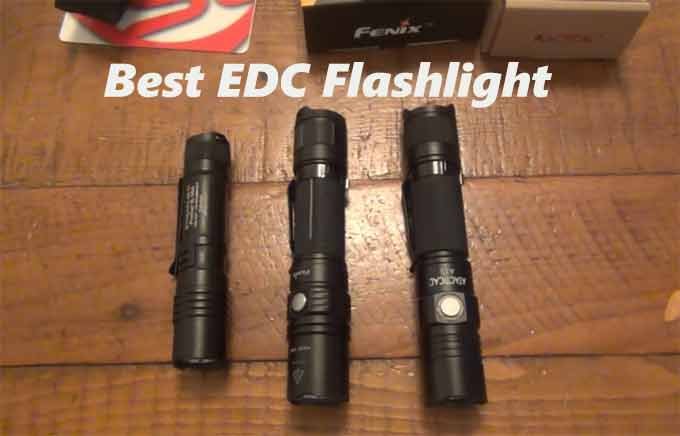
- Brightness: Enough light for your usual tasks without unnecessary battery drain.
- Water Resistance: An appropriate IP rating for rain and outdoor conditions.
- Impact Resistance: A durable body that can handle occasional drops.
- Battery Type: Rechargeable batteries for convenience or replaceable cells for flexibility.
- Switch: Easy one-handed operation without accidental pocket activation.
- Build Quality: Strong materials, reliable electronics, and a secure pocket clip.
Best EDC Flashlight Comparison Chart
| Image | EDC Flashlights | Lumens & Modes | Feature Details |
|---|---|---|---|
2026 Editor’s Choice Check Price |
Olight Baton 4 Rechargeable EDC Flashlight Earlier S1-style light pictured. The link is for the Baton 4. Read Review |
Max: 1,300 lumens Modes: 5 brightness levels + Strobe |
Battery: 650mAh rechargeable battery, included Weight: 1.85 oz with battery Charging: Magnetic |
Tactical Choice Check Price |
Streamlight 88061 ProTac 1L-1AA Dual Fuel Professional Tactical Light Read Review |
Max: 350 lumens with CR123A; 150 with AA Modes: High, Low, Strobe |
Battery: One CR123A or one AA alkaline/lithium Weight: 2.5 oz with CR123A Control: Programmable tail switch |
Cheap Choice Check Price |
LUMINTOP Tool AA EDC Flashlight Read Review |
Max: 550 lumens with 14500 Modes: 3 brightness levels Figures are for the original Tool AA. |
Battery: One AA or compatible 14500 Weight: Approximately 0.8 oz without battery Carry: Compact body with pocket clip |
The three picks cover different jobs: compact rechargeable carry, flexible spare batteries and simple AA-sized carry. Below, I’ve kept the older and larger lights that still make sense for specific jobs. Check the version before comparing batteries or peak output.
Best EDC Flashlight Reviews: 2026 Buying Guide
There isn’t one flashlight that’s perfect for everyone. Some people prefer a light that practically disappears inside a pocket. Others want a stronger beam for camping, security work, or roadside emergencies.
The following models offer different combinations of brightness, durability, battery options, and portability. Where the image and product link refer to different generations, I’ve identified the linked model separately.
1. Olight Baton 4 and Original S1 Baton
The Baton 4 in the table is my compact rechargeable pick. Its 1,300-lumen Turbo is rated for a 170-meter beam and 7,225 candela. That peak is useful for a quick look across a driveway. For a walk or an inspection, use a lower setting that gives you enough light without heating the small body as quickly. Olight rates Moonlight at 0.5 lumens, so the tiny light also has a genuinely low setting for a dark room or tent.
The Baton 4 uses its supplied 650 mAh rechargeable battery and a compatible magnetic cable. The cable can take USB power, but it connects to the light magnetically. A Baton 4 charging case is a separate configuration. If you want one cable for your phone and flashlight, compare where each cable actually plugs in.
The older Olight S1 Baton pictured in this review is about 2.4 inches long and is rated for 500 lumens. Its manual shows a step-down to 300 lumens after the initial burst. It takes a CR123A or compatible RCR123A, with any rechargeable cell charged externally. The S1R and Baton 4 use different charging arrangements.
Its side switch makes brightness adjustments convenient, while the TIR optic produces a useful beam for close-range work and everyday activities.
The S1 Baton is attractive if you dislike carrying bulky equipment and prefer a replaceable cell. If you prefer a flashlight that accepts AA batteries, our Olight S1A Baton review covers a different compact option worth comparing.
Olight S1 Baton Specifications
| Feature | Specification |
|---|---|
| Maximum Brightness | 500 lumens |
| Beam Distance | 110 meters / 3,000 candela |
| LED | Cree XM-L2 |
| Length | Approximately 2.4 inches |
| Weight | Approximately 1.1 ounces without battery |
| Battery | One CR123A or manufacturer-approved RCR123A |
| Charging | External charger for the compatible rechargeable cell |
The image below shows the original S1. Its link is for the Baton 4.
 Check Price
Pros:
- Extremely compact and lightweight
- Strong output for its size
- Convenient side switch
- Useful low-brightness settings
- Durable aluminum construction
Cons:
- Small body may feel awkward in larger hands
- The original S1 uses a different battery and charging arrangement from the Baton 4
2. Streamlight 88061 ProTac 1L-1AA
The Streamlight ProTac 1L-1AA is an excellent choice if battery flexibility matters more to you than having the smallest possible flashlight.
Unlike many compact tactical flashlights, model 88061 accepts either one CR123A lithium battery or one AA alkaline or lithium battery. That makes finding replacement power easier during emergencies.
With a CR123A battery, it is rated at 350 lumens, 6,400 candela and 160 meters. On AA, it reaches 150 lumens and 105 meters. Streamlight lists about 1 hour 20 minutes on High with alkaline AA and 4 hours 15 minutes with lithium AA. That is a practical example of why runtime depends on chemistry even when the lumen rating is the same.
Its TEN-TAP tail switch offers high/strobe/low, high only or low/high. I’d set it to low/high for regular use around the house. For a backup kit, I’d carry a supported spare rather than substitute an unapproved 14500 just because the shape resembles an AA. The reversible pocket clip also makes it convenient for everyday carry.
Pros:
- Accepts both CR123A and AA batteries
- 350-lumen maximum output with CR123A
- Programmable operating sequences
- IPX7 water-resistance rating
- Compact aluminum construction
Cons:
- Lower brightness when using AA batteries
- No built-in USB charging
 Check Today’s Price
3. Lumintop Tool AA Pocket-Size Flashlight
The Lumintop Tool AA is worth considering if you want an affordable flashlight that’s easy to carry and uses common battery sizes.
The original Tool AA with a Cree XP-L HD LED can produce up to 550 lumens when powered by a compatible 14500 lithium-ion battery. However, its output is considerably lower with a standard AA battery.
It has a straightforward interface, a convenient pocket clip, and a compact aluminum body. For simple everyday tasks, that combination is often more useful than having dozens of lighting modes.
The 550-lumen figure is for the original pictured Tool AA. The Tool AA 2.0 is rated up to 650 lumens on a compatible 14500 and has four steady levels plus strobe. For the earlier model, an AA is a convenient choice for ordinary tasks. Use the higher-output 14500 setup only if it is approved for your version. The original light does not charge the cell in its body.
Pros:
- Small and lightweight
- Compatible with common AA batteries
- Higher output with an approved 14500 cell
- Simple controls
- Good for everyday pocket carry
Cons:
- Maximum brightness depends on battery type
- Different generations have different specifications
 Check Product Options
4. ThruNite TN12 EDC Flashlight
The ThruNite TN12 is a practical option for people who need more brightness and a larger grip than ultra-compact EDC lights provide.
The TN12 2016 linked here is the older model, rated up to 1,050 lumens. It has a rear power switch and a side mode switch. The higher-output TN12 Pro is a separate USB-C model with its own specifications. It supports six lighting settings, including Firefly and Strobe.
The tail switch controls power, while the side switch changes brightness. This arrangement is convenient when you frequently switch between close-range and outdoor lighting.
The TN12 2016 uses an 18650 battery but doesn’t have built-in USB charging. Its rechargeable battery must be charged using suitable charging equipment. Newer TN12 versions may have different charging features.
Pros:
- Bright output and useful beam distance
- Multiple lighting modes
- Durable aluminum body
- Convenient tail and side switches
- 18650 battery compatibility
Cons:
- Larger than most pocket-size EDC lights
- Older version requires an external charger
 Check Price
5. Nitecore MT1A Mini LED Flashlight
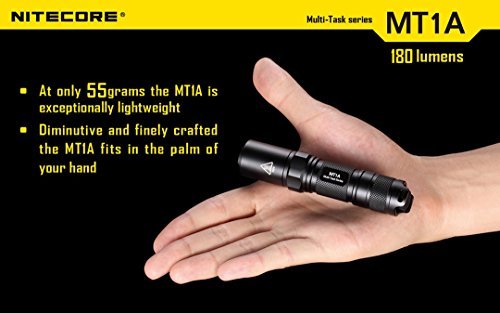
The original Nitecore MT1A is a good option for anyone who prefers a simple AA-powered flashlight instead of a rechargeable model with a special battery pack.
It uses a single AA battery and produces up to 180 lumens. Its two main operating selections include Turbo and a user-defined mode with additional brightness and signaling settings.
The compact aluminum housing, tail switch, and anti-roll design make it convenient for everyday tasks.
Although newer flashlights offer much greater brightness, the original MT1A still appeals to users who value widely available batteries and straightforward operation.
If you want a more powerful compact alternative with a red secondary LED, our Nitecore MT10C review covers a different option.
Pros:
- Runs on one AA battery
- Compact and convenient to carry
- Useful brightness and signaling modes
- Durable aluminum construction
- Simple battery replacement
Cons:
- Limited brightness compared with newer lights
- Original MT1A differs from MT1A Pro
Original MT1A pictured: The link below is for the MT1A Pro. The Pro is rated at 800 lumens and 250 meters with its specified rechargeable 14500. USB-C is on that removable cell. The Pro can also run on a supported AA at lower output. The original MT1A manual prohibits a standard 3.7-volt 14500, so keep the two battery charts separate.
 Check Available Version
6. Klarus Mi7 EDC Flashlight
The Klarus Mi7 combines strong brightness with a small, easy-to-carry body.
It offers up to 700 lumens when using a suitable 14500 rechargeable lithium-ion battery. A compatible AA battery can also be used, although maximum output is lower.
The Mi7 has a side switch, multiple lighting settings, and a lockout function to help prevent accidental activation inside your pocket.
Its compact size makes it useful for walking, camping, and everyday situations where carrying a full-size flashlight would be inconvenient.
Pros:
- Compact and lightweight
- Up to 700 lumens with the specified battery
- AA battery flexibility
- Lockout function
- Durable aluminum body
Cons:
- No built-in Micro-USB charging on original Mi7
- Maximum output requires the appropriate battery
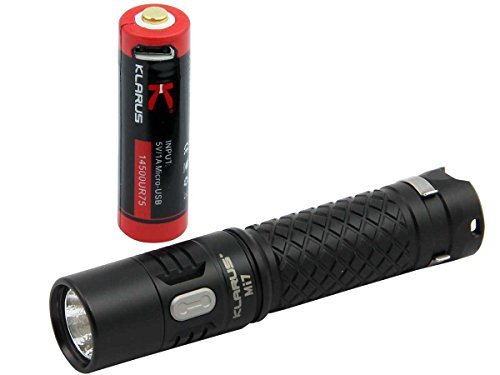
Mi7 pictured: The photo shows the original Mi7 and a battery with its own Micro-USB port. The Mi7 body itself has no charging port. The link below goes to the larger Klarus EP10 family. The EP10 V2 has a USB-C body port and a different battery format, so use the markings on the actual light before choosing a cable.
 Check Product Details
7. Coast G19 LED Inspection Flashlight
The Coast G19 is different from the brighter tactical lights on this list. It’s designed for close-up inspection work rather than lighting distant objects.
Its narrow inspection beam is useful for checking electrical panels, working under a vehicle’s dashboard, or finding small objects in dark spaces.
The G19 is rated for a 20-meter beam and up to 2.5 hours. Its slim body uses a single AAA in the pictured setup. Coast also lists a compatible ZX100 rechargeable battery for its current G19. Check the instructions for your exact version and battery. Its slim body and pocket clip make it particularly convenient for work.
For inspection, a close, consistent beam can be more useful than the bright center of a thrower. I’d choose the G19 for checking labels or fittings in tight spaces.
Pros:
- Slim, pocket-friendly design
- Focused inspection beam
- Easy operation
- Convenient pocket clip
- Affordable for close-range work
Cons:
- Not suitable for long-distance lighting
- Limited brightness compared with tactical models
 Check Today’s Price
8. SureFire E2D Defender Flashlight
The SureFire Defender series is designed for people who want a rugged flashlight with quick access to strong illumination.
Defender models have appeared in several versions with different outputs and battery requirements. Early LED versions include a 300-lumen model. SureFire’s E2D Defender Ultra is rated for 1,000 lumens on High and 5 lumens on Low with two 123A cells. The E2D Defender Tactical is a separate single-output version. If you expect a lower mode, check the suffix and switch behavior.
The aluminum body, tactical tail switch, pocket clip, and protective bezel give this series a more aggressive design than a typical household flashlight.
It can be useful for everyday lighting and emergency preparedness, although its size, price, and bezel design may not suit everyone.
Pros:
- Strong aluminum construction
- Quick-access tail switch
- Durable pocket clip
- Useful focused beam
- Designed for demanding everyday use
Cons:
- Crenellated bezel can catch on pocket fabric
- Specifications differ between generations
For pocket carry, check the overall length and bezel shape as well as the brightness.
9. Fenix PD25 Tactical Flashlight
The Fenix PD25 is a compact tactical flashlight with enough brightness for outdoor activities and everyday carry.
The original 550-lumen version uses a Cree XP-L V5 LED and delivers a beam distance of approximately 130 meters.
It can operate with a compatible 16340 rechargeable lithium-ion battery or a CR123A lithium battery. The tail switch provides momentary activation, while a separate side switch controls brightness.
With its durable aluminum housing, anti-roll design, and compact size, the PD25 works well for people who want stronger output without carrying a large flashlight.
Pros:
- Up to 550 lumens
- Approximately 130-meter beam distance
- 16340 and CR123A compatibility
- Multiple lighting settings
- Compact and durable construction
Cons:
- The original model charges a compatible cell outside the light
- Original PD25 differs from PD25R
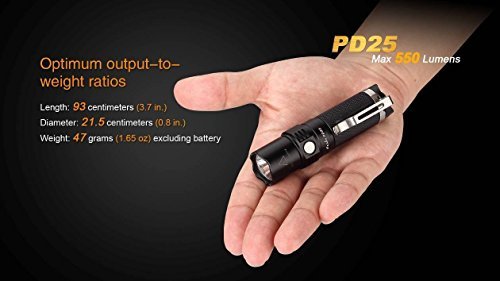
Original PD25 pictured: The link below goes to the PD25R, rated at 800 lumens, 15,533 candela and 250 meters. The PD25R charges an approved 16340 through a USB-C port under its threaded collar. The original PD25 has no port on its body. Both can run on a supported CR123A, which must stay out of the charging circuit.
 Check Available Version
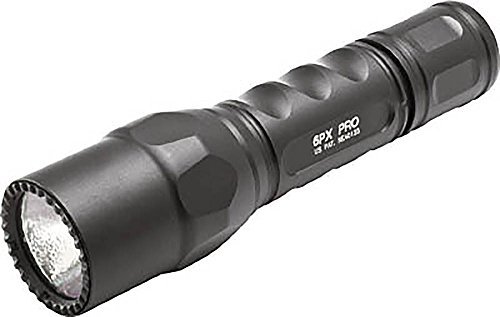
10. SureFire 6PX Pro Flashlight
The SureFire 6PX Pro is a good option for users who prefer a simple, rugged flashlight over a compact model with numerous lighting modes.
SureFire rates the 600-lumen generation at 8,700 candela and 187 meters, with a 15-lumen low. The 6PX Pro starts on low, while the 6PX Tactical has a single output. Earlier 6PX Pro examples were rated at 320 lumens. The link is for the dual-output 6PX Pro, and both output ratings have been used for that model. Check the rating on the package before applying the 600-lumen specs.
The micro-textured reflector produces a useful beam with surrounding illumination, while the aluminum body and hard-anodized finish help it withstand demanding conditions.
Unlike smaller EDC flashlights, the 6PX Pro is relatively substantial. It’s better suited to people who prioritize durability and straightforward controls over minimum pocket size.
Pros:
- 600-lumen high mode
- 15-lumen low mode for extended runtime
- Durable aluminum construction
- Simple tail-cap operation
- Reliable option for demanding use
Cons:
- Larger than ultra-compact EDC lights
- Uses two 123A batteries
- No charging port
 Check Today’s Price
11. GearLight S1000 LED Tactical Flashlight
The GearLight S1000 is a budget-friendly option for anyone who wants a general-purpose flashlight without spending much money.
It’s commonly sold in a two-pack and offers five lighting modes: High, Medium, Low, Strobe, and SOS.
The adjustable beam allows you to switch between a wider floodlight and a narrower spotlight. This can be useful for camping, household tasks, and emergency lighting.
The S1000 two-pack manual shows a holder for three AAA cells and a sleeve for one compatible protected 18650. Use the holder or sleeve for the battery type you choose and charge the rechargeable cell outside the flashlight. The standard flashlight doesn’t have built-in USB charging.
Its construction is practical for the price, although buyers shouldn’t expect the same beam quality or output regulation found in more expensive models.
If you’re comparing different GearLight models, our GearLight S1200 review covers another affordable option and its performance during regular use.
Pros:
- Affordable two-pack option
- Five lighting modes
- Adjustable beam focus
- Easy one-handed operation
- Useful for home and emergency kits
Cons:
- Actual brightness may vary from advertised claims
- No built-in USB charging on the standard model
- Bulkier than compact AA flashlights
 Check Today’s Price
How to Choose the Best EDC Flashlight for Your Needs
Before buying, think about what you’ll actually use your flashlight for. An inspection light and a powerful outdoor flashlight solve different problems.
Brightness and Beam Distance
For close-up tasks, 50 to 200 lumens can be plenty. For walking outdoors or searching larger areas, 300 to 600 lumens may be more useful.
Don’t focus on lumens alone. Beam distance and candela also matter, especially when you need to see objects farther away. The guide to flashlight flood and throw explains what those figures mean when two lights have similar lumens.
Battery Type and Runtime
AA and AAA batteries are convenient because replacements are widely available. Rechargeable lithium-ion batteries can offer strong output and reduce disposable battery purchases.
However, different battery sizes and chemistries aren’t interchangeable. Our guide to flashlight battery types explains the differences between AA, CR123A, 14500, 18650, and other common cells.
Always compare runtime at the brightness level you expect to use. A flashlight advertised with several days of runtime may achieve that figure only in its lowest mode. Our rechargeable flashlight comparison shows examples of body ports, removable USB-equipped cells and model-specific charging cradles.
Water Resistance and Construction
Look for a clear IP rating rather than relying on general waterproof claims. IPX4 indicates splash resistance, while IPX7 covers temporary immersion under specified test conditions.
Aluminum bodies are common because they offer a useful balance of strength and weight. A secure pocket clip and comfortable grip are equally important for daily carry.
Size and Switch Design
A flashlight that’s too large may spend more time at home than in your pocket. Choose a size you can comfortably carry throughout the day.
Also, check how the switch works. A lockout feature or protected button can help prevent accidental activation inside a pocket or bag.
If even a small pocket flashlight feels too bulky, consider a keychain flashlight for everyday use. These lights generally sacrifice brightness and runtime for portability, but they can be useful as backups.
Which EDC Flashlight Should You Buy?
If you want a very small rechargeable everyday flashlight, I’d start with the Baton 4. The original S1 makes sense if you prefer its replaceable-cell setup. The Lumintop Tool AA is a slim choice for keeping an AA spare. The Streamlight ProTac 1L-1AA is especially appealing if you want the flexibility of using either AA or CR123A batteries.
For stronger outdoor lighting, the Fenix PD25 and ThruNite TN12 offer more output, although they aren’t as small as some pocket lights.
The Coast G19 is better suited to close-up inspection work, while the GearLight S1000 is a practical budget option for home and emergency use.
For a larger 18650 light with a focused beam, the Fenix PD35 V3.0 review is worth reading. It reaches 1,700 lumens on Turbo, and the charging port is on the supplied USB-equipped cell. This model is a larger alternative to the three lights in the chart. If you prefer a larger SureFire with simple low-first controls, the 6PX Pro above is the relevant comparison.
Before settling on the best EDC flashlight for your routine, try a simple check. Think of the last three times you reached for a light. If two were close-up jobs, choose a usable low mode and easy switch access. If you regularly check the far end of a property, put more weight on candela and the beam after step-down. For a light you carry every day, the switch and clip matter as much as whether it fits in the pocket.
Frequently Asked Questions About EDC Flashlights
What is the best EDC flashlight for everyday use?
The best EDC flashlight depends on your needs. For general pocket carry, look for compact dimensions, comfortable controls, adequate brightness, and reliable battery life. Models that accept common battery sizes can be particularly convenient.
Are rechargeable EDC flashlights better than AA flashlights?
Rechargeable flashlights are convenient for frequent use and can reduce ongoing battery costs. AA-powered flashlights are useful when you want easy access to replacement batteries. Neither is automatically better for everyone.
How many lumens do I need for an EDC flashlight?
For household tasks and close-range use, around 50 to 200 lumens is often sufficient. Brighter models are helpful outdoors, but beam quality, distance, and runtime matter just as much as maximum output.
How long does an EDC flashlight last?
A well-made flashlight can last for years with proper care. Battery life, switch durability, moisture protection, and maintenance all affect its service life. Rechargeable batteries may eventually need replacement even when the flashlight itself continues working.
Is a small flashlight powerful enough for emergencies?
Yes. Many compact flashlights provide enough illumination for power outages, roadside emergencies, and walking at night. For prolonged emergencies, prioritize dependable runtime and available spare batteries over maximum brightness alone.
Final Thoughts
Not every EDC flashlight is worth carrying. Some offer impressive brightness but feel uncomfortable in a pocket. Others are convenient to carry but don’t provide enough runtime for longer tasks.
The best EDC flashlight is one that matches your daily routine and works reliably when you need it. Consider size, battery availability, switch design, and realistic brightness before making a purchase.
Whether you choose a compact AA light, a rechargeable model, or a larger tactical flashlight, a dependable everyday carry light is a useful addition to your gear.