Last Updated on October 25, 2026
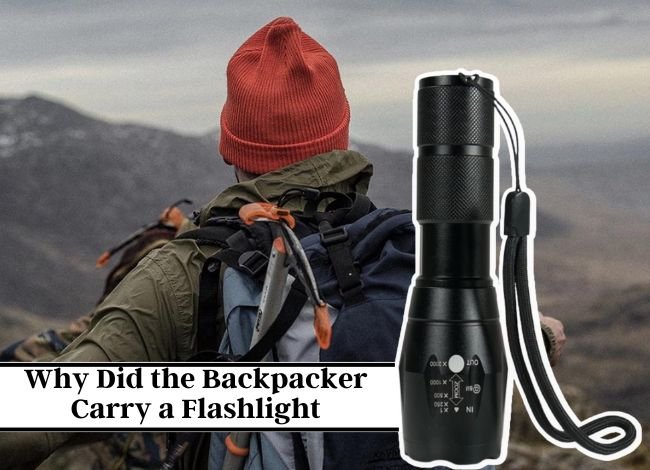
Whether you’re an experienced trekker or just beginning your journey into the great outdoors, one item should always make its way into your backpack—a flashlight. But why is it so essential?
The simple answer is safety. A flashlight helps backpackers navigate dark trails, set up camp, find essential gear, and handle unexpected emergencies.
In this guide, we’ll explore why backpackers carry a flashlight, what kind you should choose, and the many unexpected ways this simple tool can make your outdoor adventures safer and more enjoyable.
What Is a Flashlight and Why Is It Essential for Backpackers?
A flashlight is a portable, battery-powered light used to illuminate dark areas. For backpackers, it’s more than just a convenience—it’s an essential piece of safety equipment.
Whether you’re hiking through forests, setting up camp after sunset, or navigating unfamiliar trails, a reliable flashlight helps you see obstacles and move safely.
Unlike camping lanterns, handheld flashlights are compact, powerful, and easy to carry. Most modern models use LED technology, offering efficient lighting and long battery life.
In fact, the National Park Service includes flashlights and headlamps among the Ten Essentials recommended for outdoor adventures.
Top 10 Reasons Why Backpackers Carry a Flashlight
1. To Locate Items in a Backpack at Night
Ever tried to find your toothbrush or first-aid kit inside a pitch-black tent?
A flashlight lets you quickly find gear inside your backpack without unpacking everything. Whether it’s midnight or early morning, having a reliable light makes camping much more comfortable.
A flashlight with a low-brightness setting is particularly useful because it provides enough light without disturbing other campers.
2. To Walk or Hike Safely in the Dark
Backpacking often involves navigating poorly lit paths, rocky trails, or dense forests.
Flashlights help illuminate the trail ahead, making it easier to spot loose rocks, exposed roots, uneven ground, and other obstacles.
Without proper lighting, you risk tripping, falling, or taking the wrong trail.
A reliable flashlight also helps you identify trail markers and recognize your surroundings.
Pro tip: Choose a flashlight with a focused beam for distance visibility and a wide flood beam for nearby obstacles. Some models combine both beam patterns.
3. For Camp Tasks and Setup
Setting up a tent, preparing food, organizing equipment, or brushing your teeth in the dark can be frustrating without proper lighting.
A flashlight makes these activities much easier.
For tasks that require both hands, a headlamp is often the better choice. It allows you to direct light wherever you look while keeping your hands free.
A small camping lantern can also provide wider illumination inside your tent or around your campsite.
4. For Emergencies and Rescue Situations
A flashlight can be a lifesaver during outdoor emergencies.
You can use it to:
- Signal for help using a flashing or SOS mode.
- Locate injured companions in darkness.
- Illuminate your surroundings while providing first aid.
- Help rescuers identify your location.
- Navigate toward a safe location when visibility is poor.
A flashlight is especially valuable if your hike takes longer than expected and darkness arrives before you reach your destination.
However, a flashlight should not replace a whistle, map, GPS device, or satellite emergency communicator when traveling through remote areas.
5. Navigating Fog, Rain, and Bad Weather
Fog, heavy rain, and snow can significantly reduce visibility.
A flashlight helps you identify nearby obstacles, trail markings, and equipment when natural light is limited.
However, extremely bright beams can reflect off fog or precipitation, making it harder to see.
For these conditions, a lower brightness setting or wider beam may provide better visibility than maximum output.
Always prioritize finding shelter or turning back when weather conditions make hiking unsafe.
6. Red Light Mode for Night Vision and Reduced Insect Attraction
Did you know that many insects respond more strongly to certain wavelengths of light?
Some insects are less attracted to red light than to white or blue-rich light, although this varies by species.
If your flashlight includes a red light mode, it can be helpful while reading, organizing equipment, or relaxing around camp.
Red light also helps preserve your eyes’ adaptation to darkness, especially when used at a low brightness setting.
For more information, read our guide explaining why red flashlights are used during nighttime operations.
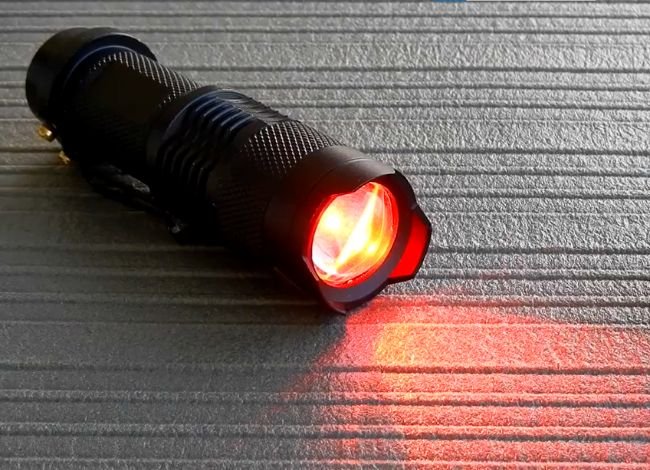
Remember that red light does not repel all insects. Insect repellent, suitable clothing, and campsite selection remain important.
7. Part of a Complete Emergency Kit
An effective backpacking emergency kit should always include a flashlight or headlamp.
Other useful supplies include:
- Rope or utility cord
- Waterproof matches or a firestarter
- Water filter or purification tablets
- First-aid supplies
- Multi-tool or knife
- Repair tape
- Extra batteries or a compatible power bank
- Emergency whistle
- Emergency shelter
Your flashlight becomes particularly valuable during unexpected overnight stays, severe weather, or situations where you need to locate supplies quickly.
Before leaving home, test your flashlight and confirm that its batteries are fully charged.
8. To Help Build a Fire Safely in the Wild
Some backpackers wonder whether a flashlight lens can start a fire using sunlight.
In theory, a suitable convex lens can concentrate sunlight enough to ignite dry tinder. However, most modern flashlight lenses are not designed for this purpose.
Many LED flashlights use specialized optics or reflectors that cannot effectively concentrate sunlight.
Removing the lens may also damage your flashlight or compromise its waterproof seals.
Instead, carry waterproof matches, a lighter, or a dedicated firestarter.
A flashlight is still helpful when preparing a fire because it allows you to inspect your surroundings, locate materials, and work safely in low light.
Always follow local fire restrictions and avoid starting fires during wildfire warnings.
9. For River Crossings and Wet Environments
Backpacking sometimes involves rivers, lakes, or coastal areas.
For these conditions, invest in a flashlight with a suitable water-resistance rating.
A water-resistant flashlight can help with:
- Finding equipment near streams or lakes.
- Inspecting wet or slippery terrain.
- Locating trail markers near water.
- Managing equipment during unexpected rain.
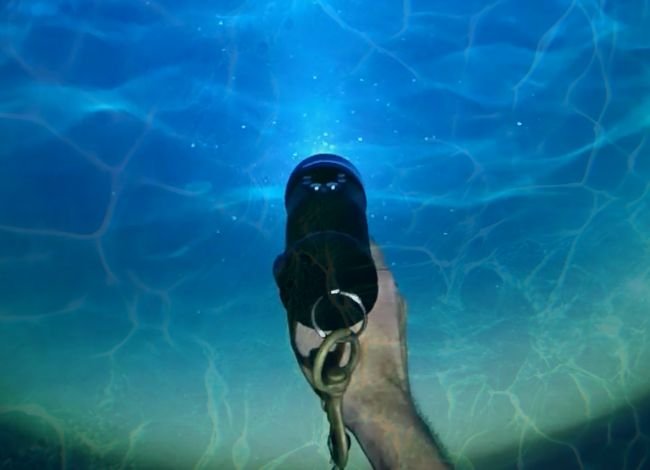
For actual underwater exploration, use a dedicated diving flashlight rated for the intended depth.
Examples of diving-oriented lights include:
- Scubapro Nova 850: Designed for underwater illumination.
- Light & Motion GoBe 500 Spot: A versatile light for compatible outdoor and underwater applications.
- Mares EOS 20RZ: A rechargeable diving light with an adjustable beam.
- Kraken NR 2000: A compact rechargeable underwater lighting option.
Check each manufacturer’s current specifications, depth rating, and availability before purchasing.
Important: Never attempt a dangerous river crossing simply because you have a flashlight. Strong currents, deep water, and slippery rocks can be hazardous even in daylight.
10. For Personal Safety and Unexpected Encounters
Backpackers traveling alone or through unfamiliar areas may appreciate the extra confidence provided by a reliable flashlight.
Tactical flashlights often include:
- High-brightness settings for identifying distant objects.
- Strobe modes for emergency signaling.
- Durable aluminum construction.
- Convenient pocket clips and easy-access switches.
A bright flashlight can help you recognize potential hazards and maintain awareness of your surroundings.
However, it should not be considered a guaranteed self-defense tool. Flashing lights may not reliably stop an aggressive person or animal.
For wildlife encounters, follow local wildlife safety recommendations rather than relying on a flashlight to scare animals away.
Military Flashlights: Civilian Use and Design
What Makes Military Flashlights Special?
Military-style flashlights are often designed for rugged environments and demanding conditions.
A well-known example is the MX-991/U, an angle-head military flashlight produced by manufacturers including Fulton Industries.
Traditional military flashlights emphasize durability, practical switches, and convenient carrying options.
Many modern civilian flashlights now offer greater brightness, rechargeable batteries, and more compact designs.
Are Military Flashlights Legal for Civilian Use?
Generally, yes. Ordinary military-style handheld flashlights can be purchased and used by civilians in the United States.
However, specialized equipment may be subject to different regulations, and local laws should always be considered.
Campers, hikers, and outdoor enthusiasts often choose military-style flashlights because of their durable construction and practical design.
Why Are Military Flashlights Angled or Bent?
Angle-head flashlights have several practical advantages.
- They can be attached to vests, belts, or backpack straps.
- They provide convenient hands-free lighting when properly positioned.
- They are useful for reading maps and checking equipment.
- They allow the beam to point forward while the flashlight body remains vertical.
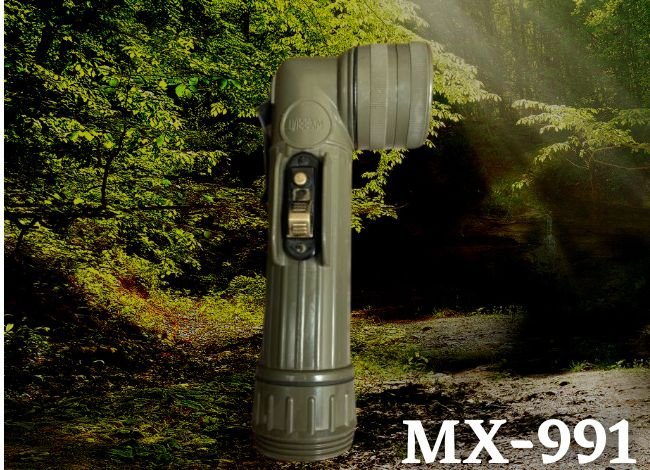
The angled design allows soldiers and hikers to work more comfortably without constantly holding the flashlight.
Modern right-angle LED flashlights offer similar advantages, often with improved efficiency and rechargeable power.
What Features Should You Look for in a Backpacking Flashlight?
Not every flashlight is suitable for outdoor adventures.
Before buying one, consider the following features.
| Feature | What to Look For |
|---|---|
| Brightness (Lumens) | 100–300 lumens is useful for many general tasks; higher output helps with distant visibility. |
| Beam Type | A flood beam for nearby tasks and a focused beam for distance. |
| Battery Type | Rechargeable lithium-ion or replaceable batteries with a suitable backup power source. |
| Runtime | Enough operating time for your trip at practical brightness settings. |
| Lighting Modes | High, medium, low, and optional red or SOS modes. |
| Water Resistance | IPX4 for splashes; IPX7 or IPX8 for specified immersion protection. |
| Durability | Impact-resistant construction and reliable seals. |
| Size and Weight | Compact and lightweight enough for comfortable carrying. |
Remember that maximum brightness is not everything. Battery runtime, beam distance, and ease of operation are equally important.
For additional buying advice, see our flashlight selection guide.
Best Backpacking Flashlights to Consider in 2026
Looking for a reliable outdoor flashlight? Here are several options worth considering.
- Fenix PD36R V2.0: A rechargeable tactical flashlight offering up to 1,700 lumens, USB-C charging, and IP68-rated protection.
- Streamlight ProTac 1L-1AA: A compact flashlight that supports compatible CR123A or AA batteries, making it convenient for backup use.
- Nitecore MH12 V2: A rechargeable flashlight with up to 1,200 lumens and multiple brightness settings.
- Black Diamond Spot 400-R: A rechargeable headlamp offering up to 400 lumens, suitable for hiking and hands-free camp tasks.
These models suit different needs. The Fenix is a strong handheld option, while the Black Diamond headlamp is particularly convenient when both hands are occupied.
Some models are older designs but can still be useful if available. Check current stock, specifications, and warranty coverage before purchasing.
You can also explore our rechargeable flashlight recommendations for additional options.
Essential Backpacking Flashlight Tips
A good flashlight is only useful when it works properly.
Keep these tips in mind before your next adventure:
- Carry backup power: Pack compatible spare batteries or a charged power bank.
- Check battery compatibility: Never use unsupported battery sizes or chemistries.
- Use lower brightness: Save battery power during routine camp activities.
- Keep it accessible: Store your flashlight in an easy-to-reach backpack pocket.
- Prevent accidental activation: Use the lockout function when available.
- Inspect waterproof seals: Check O-rings and charging-port covers before wet-weather trips.
- Carry a backup light: A lightweight headlamp or small secondary flashlight provides extra security.
- Don’t rely entirely on your phone: Preserve your phone’s battery for navigation and communication.
If you’re unsure which battery works best for your flashlight, our guide to different flashlight battery types explains the common options.
Frequently Asked Questions
Why did the backpacker carry a flashlight?
The backpacker carried a flashlight to see in the dark, navigate trails safely, find equipment, set up camp, and prepare for emergencies.
How many lumens does a backpacking flashlight need?
For most camping tasks, 100–300 lumens is sufficient. Hiking on unfamiliar trails may benefit from 300–500 lumens or more, depending on the beam pattern and conditions.
Is a flashlight or headlamp better for backpacking?
A headlamp is usually more convenient for hiking and camp tasks because it keeps both hands free. A handheld flashlight can provide a useful backup or a more focused beam.
Should backpackers carry spare batteries?
Yes. Spare compatible batteries or a charged power bank can help prevent lighting problems during unexpected delays or overnight emergencies.
Can a regular flashlight be used in heavy rain?
Only if it has an appropriate water-resistance rating. Check the manufacturer’s specifications before exposing any flashlight to prolonged rain or immersion.
Why do some backpacking flashlights have a red light?
Red light helps preserve night vision and provides softer illumination for nearby activities. It may also attract fewer insects under certain conditions.
Conclusion: Never Leave Without a Flashlight
So, why did the backpacker carry a flashlight?
Because it’s one of the most useful tools for safety, convenience, and emergency preparedness.
Whether you’re navigating rough terrain, finding gear at night, setting up camp, or dealing with unexpected problems, a reliable flashlight can make a significant difference.
Choose a lightweight, durable model with suitable brightness, dependable battery life, and adequate water resistance.
As a backpacker, don’t overlook this small but powerful tool. With the right flashlight and proper preparation, you can explore the outdoors more confidently—wherever the trail takes you.